
In today’s global supply chain, customers increasingly expect transparency, consistency, and robust quality management from chemical manufacturers. Superabsorbent polymers (SAP), widely used in agriculture, industrial absorption, cold packs, and specialty applications, require strict process control and traceability due to their performance-critical nature.
This article provides an overview of GELSAP’s product and manufacturing management practices, based on publicly available information combined with standard industry practices commonly adopted in SAP manufacturing. While not all internal processes are disclosed publicly, the following summary reflects a structured, ISO-aligned approach typical of responsible chemical producers.
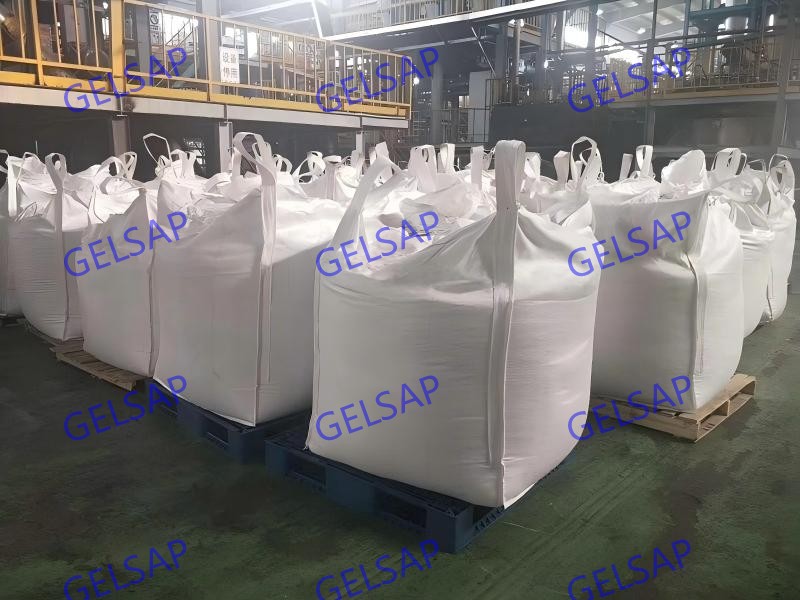

Defining Lots and Batches for Traceability
In SAP manufacturing, a lot or batch is a fundamental unit for quality control and traceability. At GELSAP, a batch is generally defined as a group of SAP products produced through a continuous process cycle that includes raw material feeding, mixing, polymerization, drying, milling, and final packaging.
Each batch is manufactured under the same processing conditions and documented within a single production record. This approach allows the company to maintain full traceability from finished product back to raw materials, processing parameters, and inspection results. Batches are typically defined by production date and equipment load, a practice widely used in chemical manufacturing to ensure consistent quality oversight.
Lot Code System and Product Traceability
A structured lot code system supports effective traceability and quality management. GELSAP’s batch numbering system follows a logical format that includes:
-
Product code
-
Production date (YYYYMMDD)
-
Shift identification
-
Production line number
For example, a lot code such as SAP001-20250115-A-03 indicates the product type, manufacturing date, shift, and specific production line. This system enables efficient tracking of formulation versions, raw material lots, operators, and quality inspection records. In the event of a quality concern, affected batches can be quickly identified and assessed.
Capacity Utilization and Scalability
Capacity utilization is a key indicator of operational efficiency and supply reliability. Based on available information and industry norms, GELSAP typically operates at a capacity utilization rate of approximately 70–85%, depending on market demand and production scheduling.
This utilization range allows operational flexibility while ensuring stable supply. If utilization consistently exceeds 85%, capacity expansion plans may be considered. These could include adding production shifts, upgrading existing equipment, or optimizing process throughput—measures commonly adopted by SAP manufacturers to support growing customer demand without compromising quality.
Customer Workload Distribution
The percentage of production workload allocated to individual customers, such as TIDI Products, LLC., naturally varies based on contractual agreements, order volumes, and annual purchasing plans. Strategic customers are typically monitored separately, with order volumes tracked and reported to management to ensure capacity alignment and service continuity.
Such monitoring supports balanced production planning while maintaining responsiveness to key customers.
Order Planning, Scheduling, and Tracking
Efficient order management is essential for meeting delivery commitments. GELSAP utilizes an ERP and MES-based planning framework to manage production activities from order receipt to shipment.
The typical workflow includes:
-
Customer order entry
-
Material Requirements Planning (MRP)
-
Production scheduling
-
Real-time manufacturing execution tracking
-
Batch output recording, including quantities and inspection results
This system enables visibility across the supply chain, allowing production teams and management to monitor progress, identify bottlenecks, and ensure orders are completed within agreed timelines.
Manufacturing Lead Time
Manufacturing lead time is a critical factor for customers planning downstream operations. For standard SAP products, the typical manufacturing cycle is 7 to 15 days, which includes production and initial quality verification.
Lead time may vary depending on product specifications, order volume, and raw material availability. Specific delivery schedules are confirmed and documented at the contract or order confirmation stage to ensure mutual clarity.
Quality Performance Communication
Quality performance metrics are an essential part of management oversight. At GELSAP, key quality indicators—such as absorption capacity, particle size distribution, AUL (Absorbency Under Load), and batch acceptance rates—are measured by the quality control laboratory.
These results are compiled into daily or weekly reports and communicated to management. Regular reporting allows leadership to evaluate quality trends and confirm that products consistently meet technical specifications and customer requirements.
Data-Driven Corrective and Preventive Action
Quality data is actively used to support corrective and preventive actions (CAPA). When deviations or negative trends are identified, data analysis is conducted to determine root causes.
Corrective actions may include process parameter adjustments, formulation optimization, or equipment maintenance. Preventive measures are discussed during monthly management review meetings, ensuring that lessons learned are incorporated into continuous improvement initiatives.
Contract Review Process
A structured contract review process ensures that customer requirements are fully understood and achievable before order acceptance. At GELSAP, contracts and orders are initially reviewed by the sales team, followed by evaluation from quality assurance and production planning functions.
This review confirms feasibility in terms of capacity, material availability, quality specifications, and delivery schedules. Final approval is typically granted by departmental or management leadership, reducing the risk of misunderstandings or execution issues.
Ensuring Product Quality and Continuous Improvement
Product quality is maintained through a combination of preventive controls and continuous improvement practices, including:
-
Standard Operating Procedures (SOPs)
-
Incoming raw material inspection
-
In-process quality checks
-
Final batch release testing
Continuous improvement efforts are supported by internal quality reviews, customer feedback analysis, PDCA (Plan-Do-Check-Act) cycles, and periodic internal audits. These practices align with widely accepted ISO 9001 quality management principles commonly applied across the chemical industry.
Conclusion
Through structured batch management, systematic planning, data-driven quality control, and continuous improvement practices, GELSAP demonstrates a manufacturing approach consistent with international expectations for SAP production.
While certain operational details are not publicly disclosed, the combination of available information and standard industry practices reflects a commitment to product consistency, traceability, and customer satisfaction—key factors for success in the global superabsorbent polymer market.

 English (New Zealand)
  English
  Deutsch
  Español
  Français
  Русский
  日本語
日本語  العربية
  Italiano
  한국어
한국어  Tiếng Việt
  简体中文
简体中文  Dansk
Dansk  हिन्दी
  Suomi
Suomi  Íslenska
  Bahasa Indonesia
  English (South Africa)
  English (Australia)
  English (Canada)
  香港中文
香港中文  繁體中文
繁體中文